
NaviForce vs Reward Watches: Which Brand is Better?
Two Brands, One Mission
Both NaviForce and Reward have carved out a loyal following among Indian watch enthusiasts who want premium style without luxury-brand prices. But they approach watchmaking differently. Understanding those differences will help you pick the brand that fits your personality and lifestyle.
Design Philosophy
NaviForce leans into bold, sporty aesthetics. Expect larger case sizes (42–48 mm), chunky bezels, and busy dials packed with sub-dials, date windows, and dual-time displays. Their colour palette is adventurous — blue, green, and rose-gold tones feature heavily alongside classic black and silver.
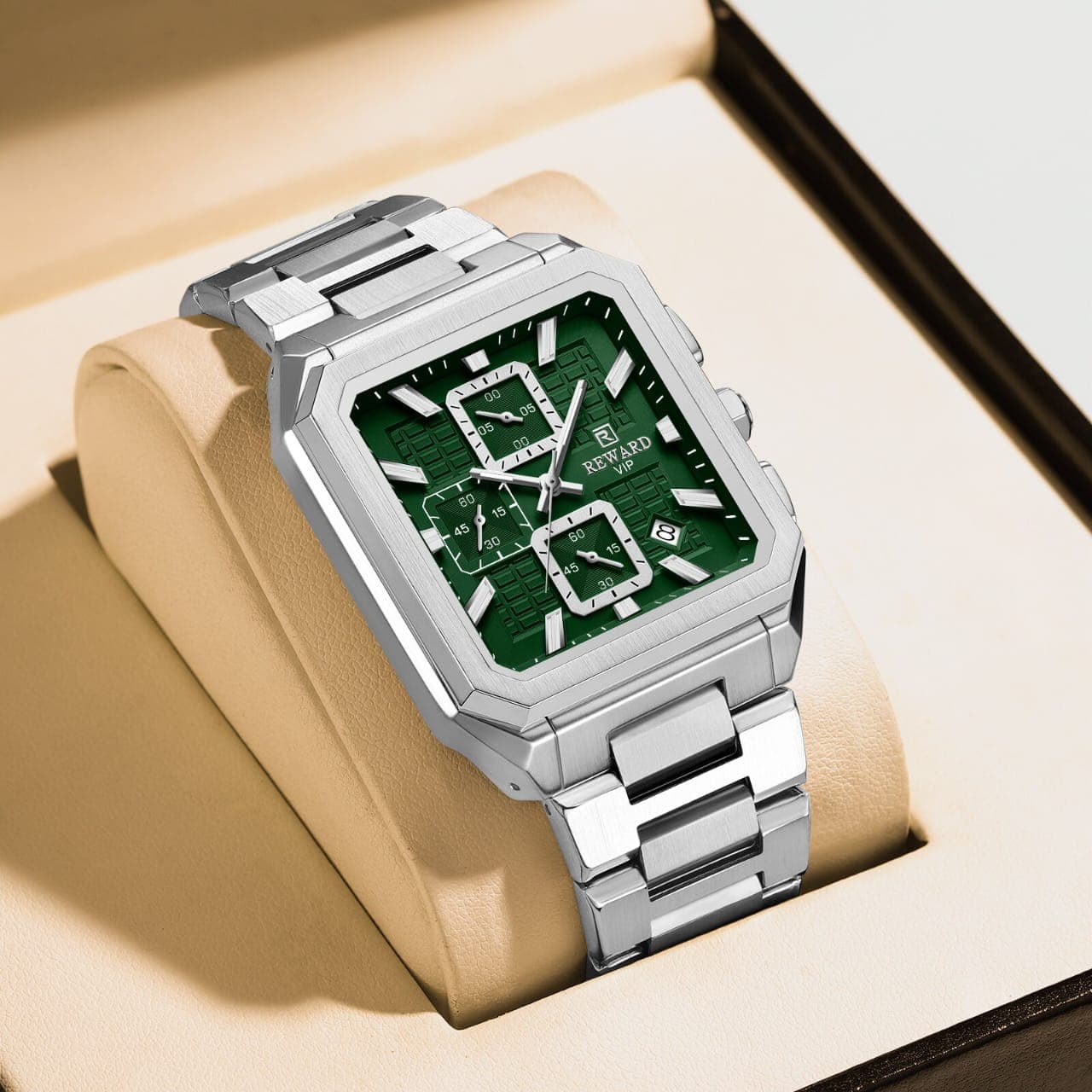
Reward, on the other hand, favours understated elegance. Cases tend to be slimmer (38–42 mm), dials cleaner, and complications limited to a date window or day-date at most. If NaviForce is the SUV, Reward is the sedan — both get you there, but the ride feels different.
Build Quality & Materials
Both brands use 316L stainless steel for their cases, which is the same grade used by far more expensive Swiss and Japanese brands. Straps vary: NaviForce offers more silicone and nylon options for sport models, while Reward provides more genuine leather choices.
Crystal quality is comparable. Most models from both brands use mineral glass, with higher-end pieces using sapphire-coated mineral crystal. Neither brand uses full sapphire at this price point, which is entirely expected.
Water resistance is where NaviForce edges ahead slightly. Several NaviForce sport models are rated at 50 m or even 100 m, whereas most Reward models sit at 30 m. If you need a watch for swimming or water sports, NaviForce has more options.
Movements
Both brands primarily use Japanese quartz movements. NaviForce sources from TMI (a Seiko subsidiary) for many of their analogue models and uses dual-module setups for ana-digi watches. Reward also uses Miyota and TMI movements but sticks to pure analogue.
For everyday accuracy and reliability, both are essentially equal. You can expect battery life of 2–3 years and accuracy within ±20 seconds per month.
Price Range
At Reward NaviForce Store, both brands sit in the ₹1,999–₹4,999 range for most models. NaviForce sport watches with dual displays tend to be at the higher end; Reward dress watches tend to be slightly more affordable. The difference is rarely more than ₹500–₹1,000.
Which Should You Choose?
Choose NaviForce if you prefer a sporty, rugged look, need higher water resistance, or want features like dual time zones, stopwatches, and backlights.
Choose Reward if you prefer a refined, dressy aesthetic, want a lighter watch for all-day comfort, or value a clean dial that pairs easily with formal and semi-formal outfits.
The best part? You do not have to choose just one. Many of our customers own one of each — a NaviForce for weekends and workouts, and a Reward for office days and events. Explore both brands in our full collection.
The Bottom Line
There is no clear "winner" because the brands serve different tastes. Both deliver outstanding quality and value in the under-₹5,000 segment. What matters most is matching the watch to your style and the occasions you wear it for.